what is the point to remember about ebbinghaus learning experiments
10 MIN READ
Ebbinghaus's Forgetting Curve
Why Nosotros Keep Forgetting and What We Can Do Nigh It

© GettyImages
Zbynek Pospisil
Always go the feeling you lot're forgetting something? Boost your ability of call back!
Forgetting can be infuriating, particularly when you're trying to larn a new skill or absorb vital data. When you can't call back the knowledge you need, stress tin build and your conviction can have a knock. It may even lead to wasted time, missed opportunities, and costly mistakes.
But when you empathise why yous forget, you can take steps to forestall it, and brand sure that what you lot larn, sticks!
In this commodity, we explore Ebbinghaus'southward Forgetting Curve, an indelible model that demonstrates how memories are lost over time and what nosotros tin can do to reinforce the things that we larn, so that we tin retrieve them more finer.
What Is the Forgetting Curve?
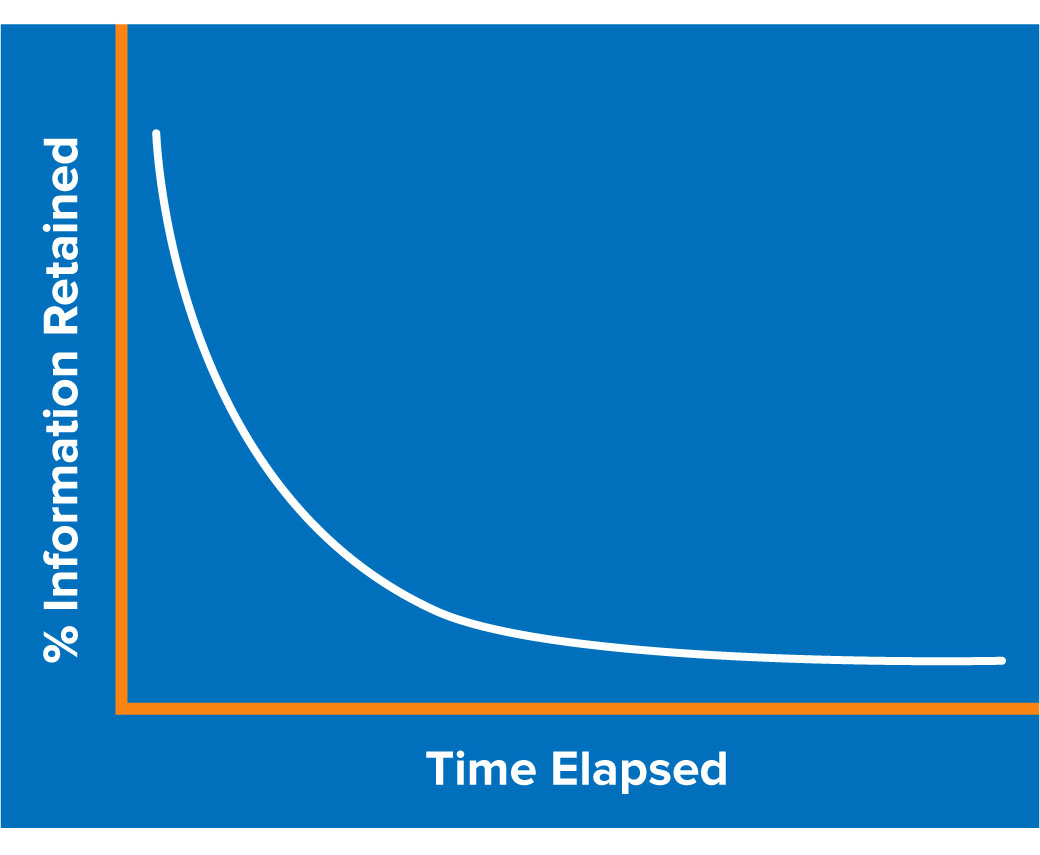
High german psychologist Hermann Ebbinghaus wanted to understand more about why we forget things and how to prevent it. His research produced the Forgetting Curve – a visual representation of the way that learned information fades over time (see figure 1, below). [1]
Ebbinghaus experimented with his own ability to call back using a list of nonsense syllables, which he attempted to recollect afterward different lengths of time. His experiences and results revealed a number of key aspects of memory:
- Memories weaken over time. If we learn something new, but then brand no attempt to relearn that information, nosotros recall less and less of it as the hours, days and weeks go by.
- The biggest drop in retentiveness happens before long subsequently learning. This is reflected past the steep fall at the start of the Forgetting Curve (see effigy 1). Without reviewing or reinforcing our learning, our power to retain the information plummets. For example, you may get out a webinar or meeting with your head full of new facts and figures, only to observe that you can remember very little of information technology just hours afterwards.
- It's easier to retrieve things that have pregnant. Things with piffling or no meaning (similar the nonsense syllables Ebbinghaus tried to learn) adjust most closely to the Forgetting Curve. So, for instance, if you lot're listening to a talk on a field of study that you don't really understand or take fiddling interest in, you'll likely forget it faster than if it were on a subject that you found actually engaging or exciting.
- The mode something is presented affects learning. The same fix of information can exist made more or less memorable, depending on how well it's communicated. You'll likely discover information technology easier to remember something that's been organized logically and presented clearly. But you may well forget that haphazard, scribbled shopping listing!
- How yous feel affects how well you remember. Ebbinghaus believed that physiological factors, such as stress and slumber, play a significant part in how well we retain data. Many people experience this as a vicious cycle – they experience stress, which makes information technology harder to remember, creating fifty-fifty more stress. There's also strong evidence to advise that sleep tin help our brains to sort and shop information. [2]
Figure 1 – The Forgetting Curve
Note:
Ebbinghaus's enquiry dates back to the 1880s, just it is yet widely used and highly regarded. In 2015, a enquiry squad successfully reproduced his findings, and ended that his methods and theories notwithstanding held true. [3]
The Importance of Non Forgetting
Memory is important for our survival. Our brains are good at storing data that helps united states of america to avoid physical or psychological impairment.
We are particularly good at remembering the things that we need to know – details that are of vital importance to our survival. For example, foods nosotros should avert, pathways or areas we should stick to, and the people who are important in our lives. We also tend to remember experiences that trigger powerful emotions – such as surprise, fear, success, or relief – for longer.
But this means that many of the things that we want to learn (or that others demand us to know) can drop out of our retentivity all likewise hands.
This is where the Forgetting Bend comes in!
Note:
Some aspects of memory can change with historic period. Your short-term retention may feel weaker, for example, and it can be more challenging to learn completely new things. Merely Ebbinghaus'due south work showed that sensible strategies and good self-care tin can help to keep your memory stiff.
Bated from crumbling, a number of other physical and mental factors can change how you think and learn. If yous're ever worried almost a modify in your memory, be certain to seek medical advice.
How to Prevent Forgetting and Boost Your Memory
Information technology'southward tempting to recall that Ebbinghaus's work paints a bleak picture of learning. Just it's not all negative. In fact, his research highlighted several things that we can do to retain information for longer. In this section, we look at iv strategies you can employ to improve your power of recall:
1. Use "Spaced Learning"
The near of import discovery Ebbinghaus made was that, by reviewing new data at fundamental moments on the Forgetting Bend, yous can reduce the rate at which you forget information technology!
This arroyo is often referred to as "spaced learning" or "distributive practice." [iv] (See figure 2, below.)
Figure two – Using Spaced Learning to Combat the Forgetting Bend

Even though our memory fades quickly, a review session soon after the original learning can ameliorate it. This session should happen when recall has slipped significantly, but hasn't fallen and then depression that y'all're essentially starting over.
Reviewing and refreshing information regularly halts the Forgetting Curve. (In figure 2, the dotted office of each curve shows what would likely happen otherwise.) And, although forgetting starts again after each review session, it'south slower than before. That'south why each new curve shown in figure 2 is shallower than the concluding.
The gaps between your review sessions tin exist longer every bit fourth dimension goes on. So, you might refresh your learning from a lecture the post-obit mean solar day, then 2 days later, then after a week, then afterwards thirty days… and you'll nonetheless know all the central information a calendar month on! Reviewing information like this, at strategic points after you originally learned information technology, will stretch your recall and strengthen the memories encoded in your brain. You'll also detect any gaps that you lot need to focus on and relearn, if necessary.
Note:
Exactly how you lot fourth dimension and space your review sessions will depend on a number of factors: the type of textile you lot're learning, how much particular y'all demand to know, and how long you want to keep it fresh in your mind. And, if other data disrupts or distracts you, you'll likely have to put in more work to keep your learning strong.
2. Overlearn
Another strategy Ebbinghaus explored was "overlearning" – that is, putting in more than the usual corporeality of effort when you learn something. He establish that doing this improved memory, and slowed the steep drop seen on the Forgetting Curve.
He as well pointed out that, past using certain retentivity strategies, nosotros can better our chances of retaining even hard-to-learn information.

Subscribe to Our Newsletter
Receive new career skills every week, plus get our latest offers and a gratuitous downloadable Personal Development Program workbook.
Read our Privacy Policy
3. Make Information Meaningful
Do everything you can to make the textile that you need to larn clear, relevant and purposeful, and establish a potent reason for retaining it. The more yous know how something will benefit you lot in the long term, the more likely your retentiveness will prioritize it.
Reducing distractions and other demands – known every bit your "cerebral load" – should also assist with this.
4. Keep Challenging Your Memory
If y'all come to review some information and discover gaps in your retentivity, don't despair! This is the virtually productive time for stretching your think. Learning washed at this signal will exist all the stronger because of the mental challenge involved.
If you're imparting learning or information to an audience, or delivering training, brand information technology as interactive every bit possible. Even just asking questions volition encourage people to sort and strengthen the information in their minds.
Key Points
The Forgetting Bend, or the Ebbinghaus Curve of Forgetting, is an influential retentiveness model. It shows how learned information slips out of our memories over time – unless we accept action to go along it in that location.
The steepest drop in memory happens speedily after learning, so it's important to revisit the information y'all've learned sooner rather than later. Subsequently that, regular reviews will help to reinforce information technology. But y'all can go out longer and longer gaps between these review sessions. This is known every bit "spaced learning."
Doing this will help to reinforce your learning and improve your power of recall, so that you lot tin remember what y'all've learned in the long term. Other strategies you can employ to improve your retention are: overlearning data, making what you want to acquire meaningful, and challenging your memory regularly.
Source: https://www.mindtools.com/pages/article/forgetting-curve.htm
0 Response to "what is the point to remember about ebbinghaus learning experiments"
Post a Comment